

Guidance to licensing authorities Primary legislation
For customers who are aged 18 to 24, the maximum they can stake per game cycle for online slots is £2. For customers who are aged 25 and older, the maximum they can stake per game cycle for online slots is £5. As the SI sets out, all games which meet the definition of an online slots game will be subject to a maximum stake per game cycle. “stake” means to pay or risk an amount in connection with an online slots game.

For 1968 Act casinos that meet the same size thresholds as Small 2005 Act casinos, we have proposed introducing a 250sqm table gaming area requirement. However, those casinos that would be allowed to keep their current gambling space would have more flexibility in terms of the layout of their venue compared to Small 2005 Act casinos, which may be deemed unfair by casinos without this advantage. Option (2) would not require currently operating casinos to reduce their total gambling space. However, it would be disruptive and potentially impose additional costs onto those casinos with a gambling area of 1,500sqm or more that are already established.
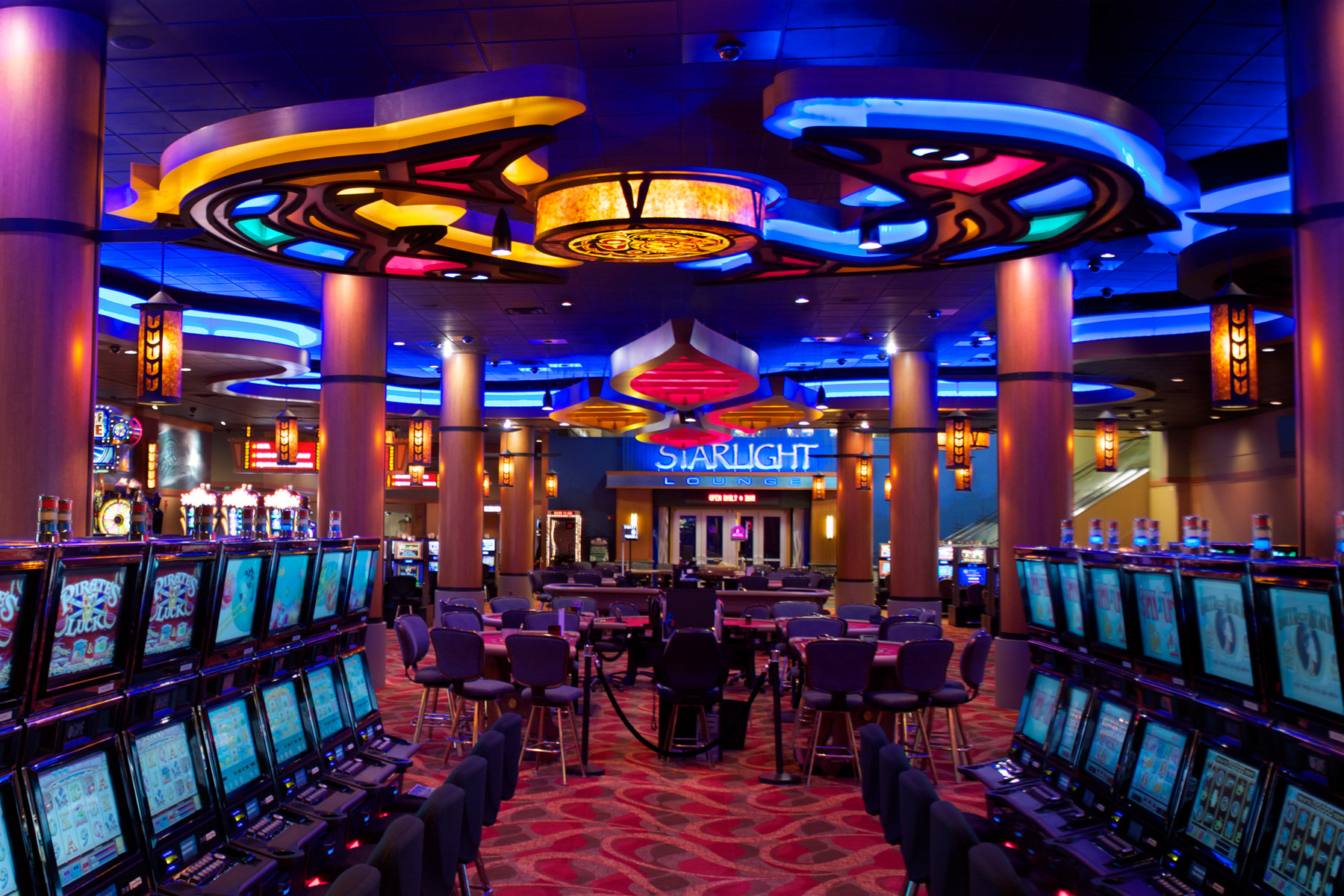
Different Games at UK Regulated Casinos
A typical online casino requires both remote casino and remote betting permissions. A licensed operator is any company that holds one or more gambling licences issued by the Gambling Commission. 456.Subsection (7) allows the Secretary of State to use her powers via regulation to control the non-gambling facilities provided in casinos by attaching licence conditions. Large and regional casino premises licences also authorise the provision of facilities for bingo, again, provided there is a valid bingo operating licence held by the person providing the activity.
Common Pitfalls That Delay or Derail UK Applications

Unlicensed sites may delay or deny withdrawals, manipulate outcomes, or share your information without consent. To check if a site holds a valid casino license that UK players can trust, simply visit the UKGC’s website and use the license search tool to verify details directly. Its main purpose is to ensure that gambling is conducted fairly and openly, that crime is kept out of the industry, and that players are protected. The UK Gambling Commission (UKGC) is the official regulatory body responsible for overseeing gambling activities in the United Kingdom. Further information on “partially automated gaming table” can be found in The Gambling Act 2005 (Premises Licences and Provisional Statements) casino not on gamstop Regulations 2007 (opens in new tab).
The Commission works alongside local licensing authorities, which are responsible for issuing premises licences for land-based gambling venues. Established under the Gambling Act 2005, the Commission oversees all commercial gambling in Great Britain — from high-street betting shops and land-based casinos to online slots, poker rooms, and sports betting exchanges. You can apply to us for a licence to provide casino games in a premises (non-remote) or online (remote). It requires remote gambling operators selling into the British market, whether based here or abroad, to hold a Commission licence to enable them to transact with British consumers. The legislative changes also introduced changes to gaming machine entitlements for converted casino premises. For casinos which exercise the extended entitlement and other larger converted casino premises, a new mandatory condition in paragraph 4 of Part 5 of Schedule 1 to the 2007 Regulations requires that the floor area of the gambling area is less than 1,500m².
As some of the differences between 1968 Act and Small 2005 Act casinos are brought in line, operating and premises licence fees and mandatory licence conditions should be harmonised accordingly. We would like to make the process for taking up the entitlement of additional machines as simple as possible for both operators and licensing authorities. Anecdotal evidence shows that only three of the 2005 Act casinos offer betting, representing about 0.2% of the total GGY for each of those casino premises. There has been no evidence that permitting betting in 2005 Act casinos resulted in increased harm, and the Gambling Commission’s view is that permitting sports betting in 1968 Act casinos is unlikely to have any particular impact on the Act’s licensing objectives. There are likely to be indirect costs in the form of displacement from online sports betting as those in casinos who would otherwise have bet on sports using mobile devices may be more inclined to do so using casino services. 1968 Act casinos to be subject to a limit on the number of self-service betting terminals depending on their total gambling space.
The personal information we collect and process is the data provided to us directly by you in the responses to this consultation. We welcome evidence from all parties with an interest in the way that gambling is regulated in Great Britain. By submitting your responses via email you are agreeing to the terms outlined in the privacy notice. (Mandatory responseYes / No / I don’t know
Feedback from engagement with operators has indicated that the sliding scale as proposed would benefit the majority of casinos, with over 80% of casinos estimated to benefit depending on how floor space is reconfigured. Forty responses were received to this question, with 60% opposed to venues being able to hold multiple licences. A sliding scale was proposed in the consultation which detailed potential requirements across (i) gambling space; (ii) table gaming space; (iii) non-gambling area; and (iv) machine to table ratio. All casinos will be allowed to offer betting, which was previously restricted to 2005 Act casinos. We will also permit a smaller increase in machines for venues that do not meet the size requirements, proportionate to their overall size and non-gambling area.
- The LCCP outlines the requirements that all operating and personal licence holders must follow.
- By contrast, the majority of gambling operators, across all sectors (bingo, arcade, casino and betting) advocated for either no increase or a small increase of 10%.
- Chapter 5 ‘Review of licensing authority fees’ outlines proposed changes to premises licence fees for Small 2005 Act casinos, which 1968 Act casinos that elect to move onto the new regime will also be subject to.
- Please provide any views or any other information on the adequacy of player protections for those using gaming machines in casinos.
We propose that Category D machines are not required to display safer gambling messaging beyond the current requirements placed on these machines. The government proposes that the existing safer gambling messaging is used on machines that accept cashless payments. As outlined above, we think the player protection measures that these machines will be required to implement will be adequate to mitigate against the risk of gambling-related harm, considering the lower maximum stakes that they are subject to. Some industry responses also argued that members of staff in casinos already monitor players and interact where appropriate. Operators who run betting shops, where staff alerts are already available, agreed that machines accepting cashless payments should also be required to have this feature. In line with their responses to other questions, the pub sector did not want these limits to apply to Category D crane grab machines.
Moreover, the current framework does not solve the issue that unless customers actively plan to bring cash to a pub for use on a gaming machine, then they are unlikely to use one. The societal shift towards cashless payments threatens the future of gaming machine GGY. They also noted the cost of refloating machines, which has become more challenging for pubs where cash payments are not taken over the bar.
Industry responses frequently highlighted the commercial pressures placed on their businesses in recent years – as a result of COVID-19 inactivity and rising energy costs – as a central reason for necessitating greater commercial flexibility. The majority of these responses came from respondents who submitted evidence to the original consultation. We also received 16 additional responses to a supplementary consultation which was held specifically to gather further evidence on the reform of the 80/20 rule. A series of key proposals specifically relating to the land-based gambling sector were outlined in the white paper, including measures to adjust outdated regulatory restrictions applying to the sector. The Department for Culture, Media and Sport (DCMS) published its gambling white paper in April 2023, which set out the government’s plans for modernising the regulation of the gambling sector.
By contrast, under Option 2, the same operator reported that it would be required to increase the number of Category C machines, resulting in increased costs. Industry respondents asserted that these machines are underused but energy intensive. Industry responses argue that the current 80/20 ratio creates a disincentive to modernise older analogue Category C cabinets as they lack customer demand, yet operators are required to maintain them to meet the ratio. Many older Category C cabinet machines are reported to produce GGY at the lower end of that scale as they are outdated and less appealing to customers.
The Malta Gaming Authority (MGA) is a respected EU regulator many operators also hold, but on its own it doesn’t provide UK-specific protections like GAMSTOP. Complain to the casino first, and if you’re not satisfied, escalate for free to its independent Alternative Dispute Resolution (ADR) provider. Reports from players help the Commission identify operators that breach the rules, even though it doesn’t resolve individual disputes directly. The UK Gambling Commission can investigate and take action, including fines, additional conditions, suspension or revocation of the licence. Casinos that accept UK players without a UK Gambling Commission licence are operating outside UK regulation, so they don’t provide UK player protections such as GAMSTOP, fund safeguarding or independent complaints. It guarantees audited, fair games, protection of your deposited funds, age and identity verification, required safer-gambling tools including GAMSTOP, honest advertising with capped wagering, and access to independent dispute resolution.
In response to these challenges, the white paper committed to changing the 80/20 rule to 50/50 to better meet the needs of industry and demands of customers. We welcome further evidence on the unmet consumer demand in the consultation response. The main theme that emerged from industry was that the current rule does not allow operators to meet consumer demand. A number of premises, particularly those located in motorway service stations, chose to retain their existing entitlements. Please upload any further evidence or any other information that should be considered as part of this consultation relating to casino measures.

Some concerns were raised by industry about the technical feasibility of voluntary limits, particularly for Category D crane grab machines. We are also proposing that this minimum transaction time applies to all machines. The vast majority of respondents agreed that there should be a minimum transaction time for customers making a cashless transaction on a gaming machine. Category D machines do not have a committed payment limit. The committed payment limits are £10 for Category B1, B2, B3 and B3A machines, and £5 for Category B4 and C machines. The deposit limits are currently set at £20 for Category B and C machines, and £2 for Category D machines.
Further details emerge about the framework for Alberta’s open online gambling sector
Are you happy for government to attribute responses to your organisation in a published response to this consultation? (Gambling industry professional, gambling researcher/academic, gambling treatment provider, personally harmed by gambling, affected negatively by another person’s gambling, recreational gambler, government/regulatory professional, other, prefer not to say) Please upload any further evidence or any other information that should be considered in this consultation relating to licensing authority fees. Please provide any additional views or evidence on the potential impacts of raising licence fees here. What do you think are the potential impacts of raising licence fees on the local area? (Mandatory response)10% / 20% / 30% / A different amount / I do not think fees should be increased / I don’t know
While it is acknowledged that the risk of gambling harm may increase somewhat following a transition to 50/50, the stipulation outlined in Option 2 would ensure that operators offer a balance of higher and lower stake gaming machines. Under the ‘available for use’ guidance, for the purpose of calculating the Category B machine entitlement in gambling premises, gaming machines should only be counted if they can be played simultaneously by different players without physical hindrance. Should the operating and premises licence fees that apply to 2005 Act casinos also apply to 1968 Act casinos that increase their gaming machine entitlements? Operating and premises licence fees for 1968 Act casinos that increase their gaming machine entitlement should match the operating and premises licence fees charged for 2005 Act casinos. These changes would only come into effect if 1968 Act casinos elect to make more than 20 gaming machines (including at least one Category B machine) available to the customer.
If an online casino doesn’t hold a valid license from the Gambling Commission in the UK, it is not legally allowed to operate in the UK. The regulations surrounding gambling in the UK are some of the most advanced and player-friendly in the world. Information for existing or prospective gambling businesses including what types of licence you may need, how much they cost and the licence conditions and codes of practice that apply to your licence. On that basis, these types of product can be sited in the table gaming area as delineated on a layout plan, although they will not count as gaming tables for the purpose of the machine to table ratio. However, licensing authorities may receive applications including a layout plan showing these automated tables and terminals sited in the table gaming area. The Gambling Act 2005 (Gaming Tables in Casinos) (Definitions) (Amendment) Regulations 2025 states that wholly automated gaming tables and electronic terminals used in connection with real games of chance, will not count as ‘gaming tables’ for the purpose of the machine to table ratio.
Please see the casino (host), bingo (host), general betting (host) (real events) or general betting (host) (virtual events) licences for further details. Some gambling software businesses provide facilities for remote gambling by making their games or betting content available to customers of other operators. Independent, hands-on reviews of UK Gambling Commission–licensed online casinos.
It is important to differentiate between unlicensed offshore casinos and international casino sites which have multiple licences. No, only those online casinos and betting sites that hold the UKGC licence can promote their business in the UK. Non-remote operating licences authorise land-based gambling activities and must be accompanied by a premises licence issued by the relevant local authority.